
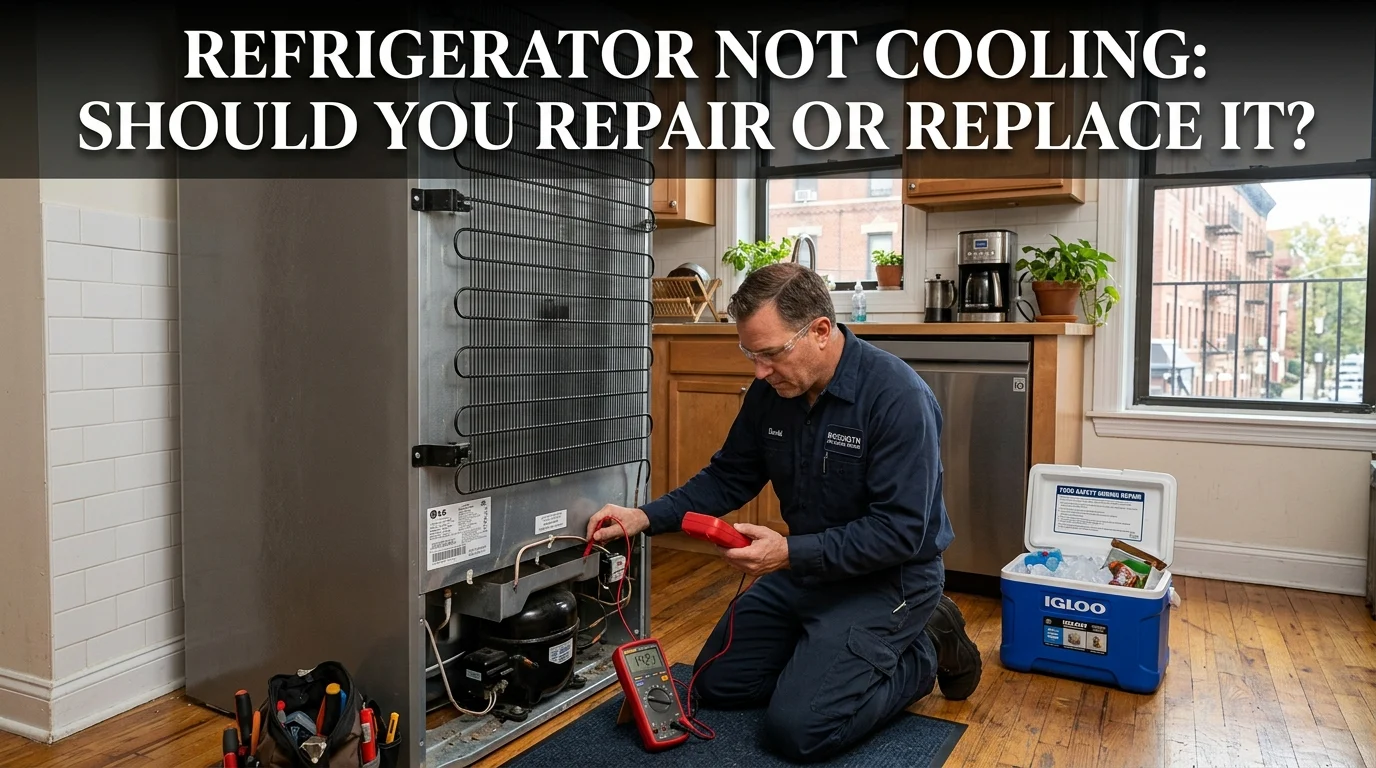
Repair it, in most cases, because the majority of cooling failures come from cheap parts, and replace it only when the sealed system fails on an older fridge. The cause answers the question. A refrigerator not cooling feels like an emergency, and it is one for your food, but the machine itself usually needs a modest fix rather than a funeral.
Repair a refrigerator that is not cooling when the cause is a fan, start relay, defrost part, gasket, or dirty coils. These fixes run $100 to $350. Replace the fridge when a sealed system or compressor fails on a unit past ten years, or when any quote tops half the price of a new one.
First, Protect Your Food: The 4 Hour Clock
Before any diagnosis, secure what is inside. A closed refrigerator keeps food safe for about 4 hours. A full freezer holds temperature for about 48 hours, and a half full freezer for about 24. Keep the doors shut, and group cold items together so they hold their chill longer. The FDA’s food safety guidance covers exactly what to keep and what to toss.
Buy Yourself Decision Time
Panic makes expensive choices. Remove the pressure with an hour of effort.
Move perishables into a cooler with ice or frozen gel packs. A garage fridge or a neighbor’s freezer works even better. Once the food is safe, the 4 hour clock stops ticking, and you can diagnose the fridge and compare quotes calmly instead of grabbing the first option available.
Refrigerator Not Cooling: Repair or Replace Depends on the Cause
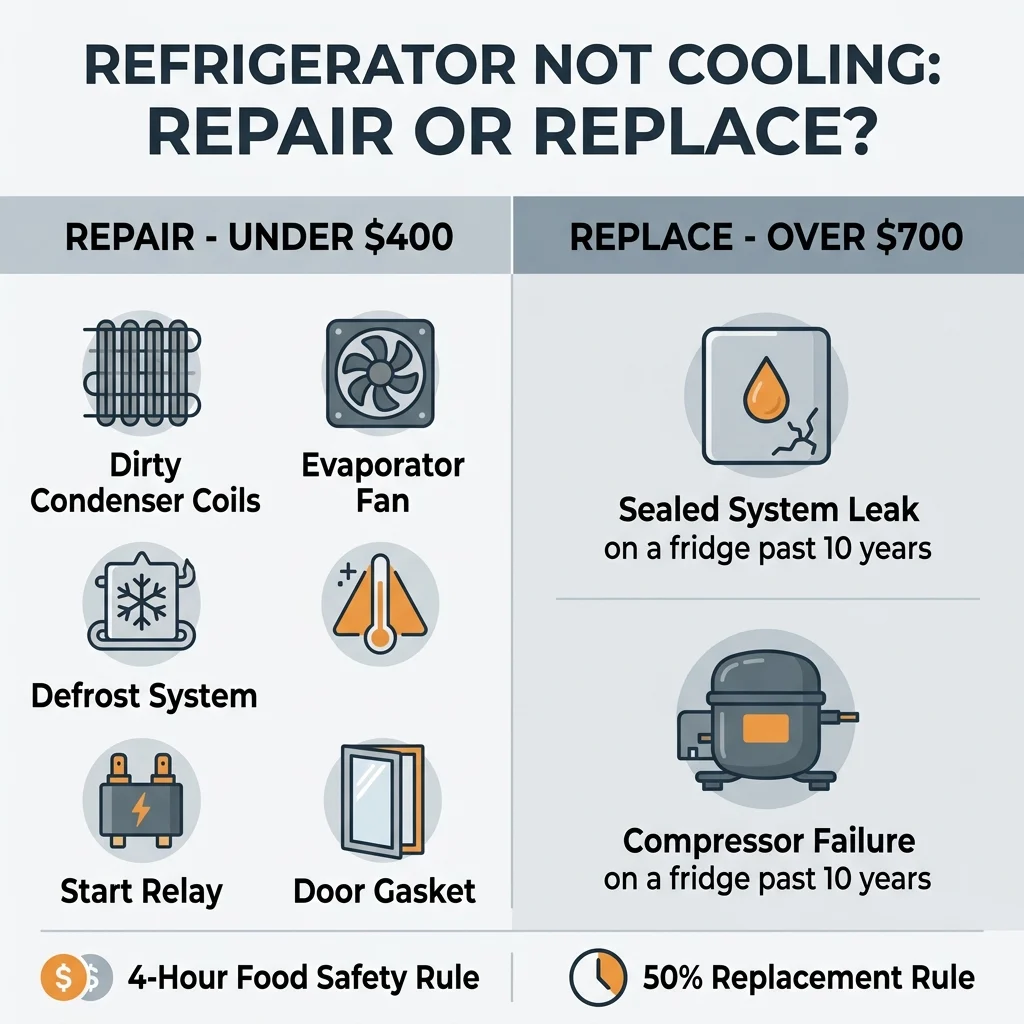
Age matters, but the failed part matters more. A twelve year old fridge with a $150 relay problem deserves the repair. A six year old budget fridge with a sealed system leak might deserve retirement. Name the cause first, then decide.
Notice the pattern. Ten causes on that list stay under $400. Only the bottom two push toward a new fridge, and they are the least common failures.
The 10 Minute Checks Before You Call Anyone
Run these five checks first. They solve a surprising share of cooling problems at zero cost, and they protect you from paying for a repair you never needed.
Vacuum the Condenser Coils
Here is the check that matters most. Coils caked in dust and pet hair trap heat, force the compressor to run constantly, and produce every symptom of a dying fridge. A technician can misread this too, so clean the coils before you accept any large quote.
Unplug the fridge. On older models, pop off the grille at the bottom front and vacuum underneath with a brush attachment. On newer models, pull the unit out and remove the rear access panel. Plug it back in and give it a few hours. Clean coils bring plenty of “failing” refrigerators back to life.
Check Settings and Demo Mode
Someone may have bumped the dial. Set the fridge to 37 or 38 degrees and the freezer to 0. On electronic models, confirm the unit is not in demo or showroom mode, where the display works but the cooling stays off. Samsung refrigerators are known for slipping into this mode.
Test the Door Gasket With a Dollar Bill
Close the door on a dollar bill. If it slides out with no resistance, the gasket has lost its seal, and warm air is leaking in around the clock. Wipe the gasket with warm soapy water first, since food residue breaks the seal too. A torn gasket costs little to replace.
Clear the Air Vents and Give the Fridge Space
Cold air moves through vents between the freezer and fridge compartments. A box pushed against a vent blocks the whole system. Clear the vents inside, then confirm the fridge has breathing room around the back and sides.
Listen at the Back
Stand behind the fridge and listen. A steady hum means the compressor is running. A click, then a buzz, then silence, repeating every few minutes, means the compressor is trying to start and failing, which points to the start relay. Total silence means the compressor or its start circuit is not engaging at all.
Freezer Cold but Fridge Warm? That Is Usually Good News
This specific symptom deserves its own section because it changes the answer.
When the freezer stays cold while the fridge compartment warms up, the cooling system itself still works. The cold exists. It simply is not reaching the fridge side. Two causes explain almost every case, and both are mid priced repairs.
The evaporator fan moves cold air from the freezer coils into the fridge compartment. Open the freezer and listen. A silent fan is a failed fan, and replacement runs $200 to $350.
The defrost system is the other suspect. Frost free refrigerators melt ice off the evaporator coils on a cycle. When the defrost heater, thermostat, or timer fails, ice builds until airflow stops completely. Pull out the freezer contents and look at the back wall. A solid sheet of ice confirms it. Defrost repairs run $150 to $400.
Either way, this symptom means fix it, not replace it, on nearly any fridge worth keeping.
When the Compressor or Sealed System Is the Problem
The compressor pumps refrigerant through the sealed system, which includes the condenser coils, evaporator coils, and the tubing connecting them. This is the one failure category that regularly ends a refrigerator’s life.
Watch for these signs together:
- A warm fridge while the compressor hums constantly and never cycles off
- Clicking every few minutes as the start relay trips
- A compressor too hot to keep your hand on
- Complete silence with no startup attempt
One caution before you spend anything. The clicking symptom often traces to the start relay alone, a $150 to $300 fix, while the compressor itself is healthy. Ask the technician to confirm which one failed before approving a sealed system quote.
True sealed system work costs real money. A leak repair with a refrigerant recharge runs $500 to $1,000. A full compressor replacement runs $700 to $1,250 on mainstream brands, and more on built in units like Sub-Zero. The price reflects the process: the refrigerant gets recovered, the new part gets brazed in, and the system gets evacuated and recharged. Federal rules under EPA Section 608 require certification for this work, so it is never a DIY job.
Check Your Sealed System Warranty First
Read this before you pay anyone. Many manufacturers cover the compressor and sealed system for 5 to 10 years, far longer than the standard one year warranty on the rest of the fridge. LG, Samsung, Whirlpool, GE, Frigidaire, and Bosch have all offered extended sealed system coverage on many models.
Find your model number inside the fridge cavity, look up the warranty terms on the manufacturer’s site, and call their service line before booking an independent repair. A covered compressor turns a $900 problem into a service scheduling call.
The Age Math: Same Failure, Different Answer
An identical quote lands differently depending on how much life remains. Refrigerators last 10 to 15 years on average, with premium and built in models running longer.
- Under 8 years: Repair nearly everything, including sealed system work on quality units. The fridge holds too much remaining value to abandon.
- 8 to 12 years: Approve every fix under $400 without hesitation. Sealed system quotes deserve scrutiny here, and they pass mainly on premium, built in, or recently high priced models.
- Past 12 years: Minor fixes still make sense, since a $200 fan can buy a few final years. Any sealed system quote at this age points to replacement, because other aged parts are lining up behind the one that just failed.
Apply the 50% rule across every bracket, and apply it against the full landed cost of a new fridge, meaning the price plus delivery, hookup, and haul away. A quote above half that number means replace.
If You Replace: Avoid the Panic Purchase
Buying a refrigerator with warm food on the counter leads to overpaying for whatever sits in stock. The cooler strategy from the first section exists precisely for this moment. With your food safe, you can shop for three days instead of three hours.
Compare on total landed cost. Delivery, water line hookup for the ice maker, and removal of the old unit commonly add $150 to $400 to the sticker price.
Give efficiency real weight here. A refrigerator runs every hour of every day, so energy use compounds in a way it never does with a washer. Certified models on ENERGY STAR show yearly energy costs side by side, and the gap between models adds up over a decade of constant operation.
Measure twice before ordering. Check the space itself, then check every doorway and hallway on the delivery path. A fridge that fits the kitchen but not the front door goes straight back on the truck.
Frequently Asked Questions
Is it worth repairing a refrigerator that is not cooling?
Usually, yes. Most cooling failures trace to fans, relays, defrost parts, gaskets, or dirty coils, and those repairs run $100 to $400. A sealed system failure on a fridge past ten years is the main exception, since that quote often approaches the price of a new unit.
Why is my refrigerator running but not cooling?
Dirty condenser coils, a failed evaporator fan, or a defrost system failure cause most cases. Vacuum the coils first, since that fix is free and works more often than people expect. If cooling stays weak after a few hours, the problem sits inside and needs a diagnosis.
Why is my freezer cold but the refrigerator warm?
The evaporator fan has stopped moving cold air into the fridge compartment, or ice from a failed defrost system has blocked the airflow. Both repairs land in the $150 to $400 range. This symptom almost always means the fridge is worth fixing.
How long can food last in a refrigerator that is not cooling?
About 4 hours in a closed refrigerator. A full freezer holds safe temperatures for about 48 hours, and a half full freezer for about 24. Keep the doors closed as much as possible, and move perishables to a cooler with ice if the repair will take longer.
Is it worth replacing a refrigerator compressor?
On a fridge under eight years old, or a built in unit worth several thousand dollars, usually yes. On a mainstream fridge past ten years, a compressor quote of $700 or more points to replacement. Check your sealed system warranty first, since many brands cover compressors for 5 to 10 years.
What are the signs of a failing compressor?
A warm fridge with a compressor that hums constantly and never cycles off is the classic sign. Clicking every few minutes, a compressor hot to the touch, and complete silence with no startup attempt round out the list. Two or more together mean it is time for a professional diagnosis.
How much does refrigerator compressor repair cost?
A start relay swap runs $150 to $300 when the compressor itself is fine. A sealed system leak repair with recharge runs $500 to $1,000. A full compressor replacement runs $700 to $1,250 on mainstream brands, and built in luxury units cost more.
How long do refrigerators last?
Between 10 and 15 years on average. Premium and built in models often run longer, while budget units may show trouble earlier. Regular coil cleaning, healthy door gaskets, and breathing room around the unit all stretch the lifespan.
What is the most expensive refrigerator repair?
Sealed system work tops the list. A full compressor replacement with refrigerant recharge runs $700 to $1,250 on mainstream brands and can pass $1,500 on built in units. Control boards follow, ranging from $250 to $800 depending on the model.
Why does sealed system work cost more than other repairs?
The job means opening the closed refrigerant loop. The old refrigerant gets recovered, the new part gets brazed in, and the system gets vacuumed and recharged with metered refrigerant. Federal rules require EPA certification for every step, and the equipment and skill drive the price.
How much does it cost to fix a refrigerator that is not cooling?
A fridge not cooling repair usually runs $150 to $450. A fan motor, thermostat, or defrost sensor sits at the low end, while a compressor or sealed system reaches the top. Our refrigerator not cooling repair service gives you a written price before any work starts.
Can a refrigerator be repaired, and how do you fix a broken one?
Yes. Most refrigerators can be repaired, and knowing how to fix a broken refrigerator starts with the diagnosis. A technician checks the coils, fans, thermostat, and sealed system, then replaces the failed part. Only a cracked liner or a compressor failure on a very old unit points toward replacement.
What does a refrigerator warm, freezer cold repair involve?
When the freezer stays cold but the refrigerator turns warm, the fix is usually a failed evaporator fan or a blocked defrost system. A refrigerator warm freezer cold repair is one of the more affordable fridge fixes, often $150 to $350.
Final Thoughts
Name the cause before you decide anything. Ten of the twelve common causes of a refrigerator not cooling cost under $400 to fix, and the free checks solve some of them today. Secure your food in a cooler, vacuum the coils, listen at the back, and check the sealed system warranty before accepting any large quote. The expensive failure is real, but it is the exception, and the numbers favor repair far more often than a warm fridge makes it feel. If your fridge is still warm after the free checks in East Flatbush or anywhere in Brooklyn, see our refrigerator repair page or book a same-day diagnostic.