

A dishwasher not cleaning dishes properly usually points to a clogged filter, blocked spray arms, low water temperature, or hard water buildup. Most of these problems are simple to fix at home, without calling in a technician.
A dishwasher not cleaning dishes is often caused by a dirty filter, blocked spray arms, or water that is not hot enough. Overloading the racks and using the wrong detergent also reduce cleaning power. Most causes can be fixed in under fifteen minutes with basic cleaning and a few simple checks.
Why Is Your Dishwasher Not Cleaning Dishes?
A dishwasher relies on hot water, strong spray pressure, and the right detergent working together. When one of these breaks down, dishes come out with spots, film, or leftover food. This kind of problem is rarely a sign the whole unit is broken. In most cases, one small part or habit is causing the entire cycle to underperform.
The good news is that these issues are easy to spot once you know what to check. Start with the filter and spray arms first, since they cause the majority of cleaning problems.
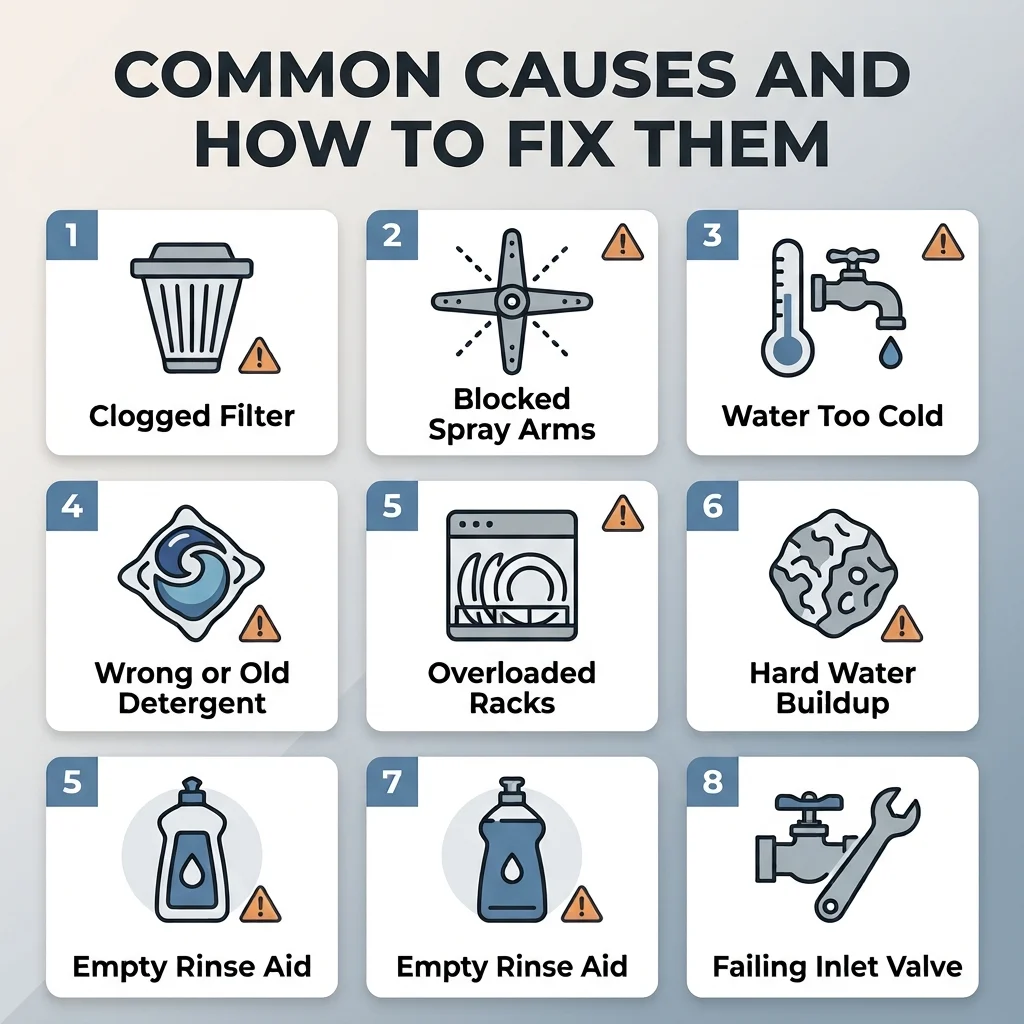
Common Causes and How to Fix Them
Clogged or Dirty Filter
Food particles collect in the filter over time and block water flow. Pull out the filter, usually located at the bottom of the tub, and rinse it under warm water. Use a soft brush to remove stuck on debris, then set it back in place before your next cycle.
Blocked Spray Arms
Spray arms shoot water onto your dishes, and their small holes can clog with food or mineral deposits. Spin each arm by hand to check for smooth movement. If a hole looks blocked, clear it gently with a toothpick.
Water Temperature Is Too Low
Dishwashers need water around 120 degrees Fahrenheit to dissolve detergent fully. Run your kitchen sink tap on hot for about thirty seconds before starting a cycle. This pulls hot water through the line faster so your dishwasher does not start with cold water sitting in the pipes.
Wrong or Not Enough Detergent
Old, clumped, or low quality detergent will not clean effectively. Use fresh detergent made for your machine, and avoid regular dish soap, which creates excess suds. Too much detergent can leave residue just as easily as too little.
Overloaded or Improperly Loaded Dishes
Crowded racks block water from reaching every surface. Leave space between dishes and angle them downward so water and detergent can flow freely across each item.
Hard Water Buildup
Mineral deposits from hard water coat the inside of your dishwasher and leave a cloudy film on dishes. A dishwasher cleaner or a plain vinegar rinse run on an empty cycle can help break down this buildup.
Empty Rinse Aid Dispenser
Rinse aid helps water sheet off dishes instead of pooling and drying into spots. Check the dispenser near the detergent compartment and refill it if it is low or empty.
A Failing Inlet Valve
The inlet valve controls water flow into the machine. A hammering noise during the cycle often signals a problem here. This is one of the few fixes that usually needs a replacement part, so it is worth checking your owner’s manual before attempting a repair yourself.
Why Is the Top Rack Not Cleaning Properly?
The top rack sits farther from the main spray arm, so it often gets less water pressure than the bottom rack. If only the top rack seems affected, check that the upper spray arm spins freely and is not blocked by tall items below it. Loading large pots or pans on the bottom rack can also block water from reaching the top level entirely.
How to Clean Your Dishwasher Filter
- Locate the filter at the bottom of the tub, usually near the spray arm.
- Twist or unlock it based on your model, then lift it out.
- Rinse it under warm running water to remove loose debris.
- Scrub stuck on food gently with a soft brush.
- Set the filter back in place and lock it securely before running a cycle.
Doing this once a month keeps water flow strong and prevents most clogging issues before they start.
When to Call a Repair Technician
Most of these causes are easy fixes you can handle yourself. Some signs point to a deeper mechanical issue instead. Call a technician if you notice a hammering noise during cycles, standing water that never drains, or a motor that runs but produces no spray pressure at all. These usually point to a failing valve, pump, or motor, parts that require proper diagnosis rather than guesswork. If you are in Brooklyn and want a professional to take a look, our dishwasher repair service covers exactly these issues.
Frequently Asked Questions
Why is my dishwasher not cleaning dishes?
The most common causes are a clogged filter, blocked spray arms, low water temperature, or overloaded racks. Checking these first solves most cases.
Why is my dishwasher not cleaning the top rack?
The top rack sits farther from the main spray source, so a blocked upper spray arm or tall items on the bottom rack often reduce water reach.
Why is my dishwasher not rinsing properly?
This usually points to an empty rinse aid dispenser, too much detergent, or hard water buildup leaving film on dishes and interior surfaces.
How do I clean my dishwasher filter?
Remove the filter from the bottom of the tub, rinse it under warm water, scrub off stuck on food with a soft brush, then place it back and lock it in.
When should I call a repair technician instead of troubleshooting myself?
Call a technician if you hear hammering noises, see standing water that will not drain, or notice the motor running with no spray pressure at all.
Why is my dishwasher not cleaning properly?
If your dishwasher is not cleaning dishes properly, the usual causes are a clogged filter, blocked spray arms, low water temperature, or hard water buildup. A dishwasher not washing clean often improves once you clear the filter and run a hot cycle with a cleaner. When the dishwasher still will not clean your dishes after that, the inlet valve or wash pump may need service.