Electric dryers usually cost a little less to repair than gas dryers, and almost all of that gap comes from the heat source and the gas line safety work. Every other part costs about the same to fix on both machines. Knowing the gas dryer vs electric dryer repair cost differences helps you set a budget and make a smart call the moment your dryer quits. This guide gives you real price ranges, explains why gas repairs cost more, and shows you when a fix beats buying a new machine.
Electric dryer repairs average $100 to $300, while gas dryer repairs run $150 to $400. Gas models cost roughly $50 to $100 more per visit because a technician must shut off, reconnect, and leak test the gas line every time. Shared parts like belts and motors cost the same on both.
Why 80% of Gas and Electric Dryer Repairs Cost the Same
Gas and electric dryers are mostly the same machine. Both share the drum, the motor, the belt, the rollers, and the bearings. They also share the blower, the control board, the thermal fuse, the moisture sensor, the door switch, and the exhaust vent.
Because those parts sit inside both models, a technician charges the same to fix them. A worn belt costs the same to swap on a gas dryer as it does on an electric one. The same goes for a tired motor or a faulty control board.
So the real repair cost difference lives in one place: the heat source. Everything else stays even. Once you see that, the whole comparison gets simple.
Gas Dryer vs Electric Dryer Repair Cost Differences, Part by Part
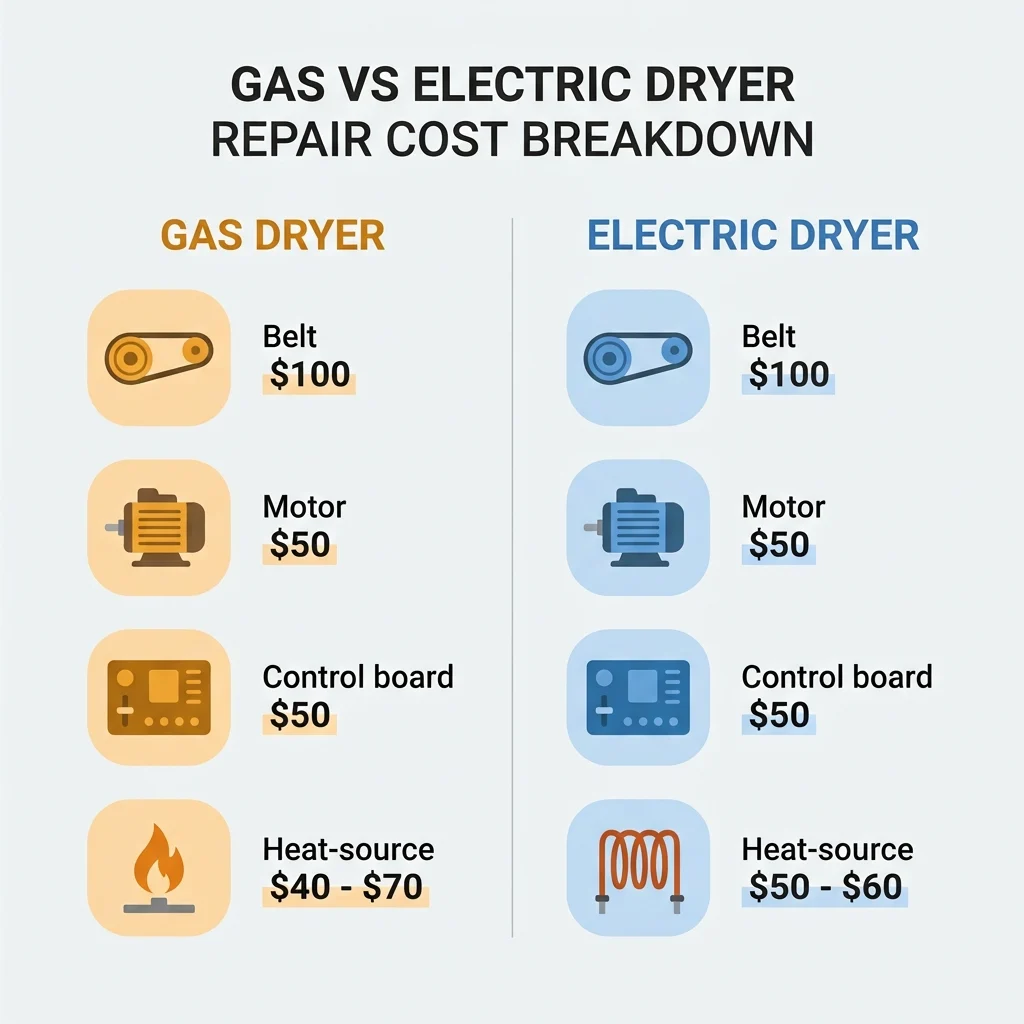
Here is where the two machines split. The table below shows the shared parts that cost the same, then the heat source parts where the gap appears.
| Part | Gas dryer | Electric dryer |
| Drum belt | $100 to $200 | $100 to $200 |
| Drum rollers | $100 to $250 | $100 to $250 |
| Motor | $200 to $450 | $200 to $450 |
| Control board | $150 to $300 | $150 to $300 |
| Thermal fuse | $80 to $150 | $80 to $150 |
| Thermostat | $100 to $200 | $100 to $200 |
| Heat source | Igniter: $125 to $250 | Heating element: $150 to $300 |
| Gas valve coils | $150 to $300 | Not applicable |
| Flame sensor | $150 to $300 | Not applicable |
The shared rows match. The bottom rows carry the difference.
Electric Dryer Repair Costs
Electric dryers keep things easy. A single heating element makes the heat, and it fails in a clean way: it works, or it stops. Replacing that element runs about $150 to $300 with labor. A blown thermal fuse costs around $80 to $150 to swap. A faulty thermostat lands near $100 to $200. Parts are common and quick to find, so most electric dryer repairs stay affordable.
Gas Dryer Repair Costs
Gas dryers light a burner to make heat, and that burner needs a few parts working together. The igniter usually costs $125 to $250 to replace. Gas valve coils run about $150 to $300, and a flame sensor sits in the same range. Each part is small, yet the ignition chain adds more pieces that can wear out over time. That is one reason the gas dryer repair cost tends to sit higher.
Why Gas Dryer Repairs Cost $50 to $100 More
The extra charge is not really about the parts. It comes from the gas line work a technician does on every single visit, even for a job that has nothing to do with heat.
Say your gas dryer needs a new belt. Before touching it, the technician has to:
- Shut off the gas supply valve behind the machine
- Disconnect the flexible gas connector
- Pull the dryer out and complete the repair
- Reconnect the line with fresh pipe dope
- Leak test every joint before leaving
Skipping the leak test is never an option. A loose gas line can release natural gas or propane into the room, which brings carbon monoxide and fire risk. You can read more about that danger on the U.S. Consumer Product Safety Commission carbon monoxide page. That careful, mandatory routine is what adds the $50 to $100. A certified Brooklyn dryer repair team follows every step, so the extra cost buys you safety, not just a fix.
Heat Pump (Ventless) Dryers: The Third Repair Category
Many buyers forget a third option. Heat pump dryers skip both the igniter and the heating element. Instead, they move heat with a compressor and a heat exchanger, a bit like a small air conditioner running in reverse.
That design changes the money math. There is no cheap heating element to swap, and a compressor repair costs more than either a gas or a standard electric fix. These units also ask for steady cleaning of the lint filter and heat exchanger to keep the compressor healthy. You pay more per repair, yet you gain strong energy savings and flexible placement, since the machine needs no outside vent.
What Else Moves Your Final Bill
Two dryers with the same broken part can still bring different invoices. A service call fee, often $75 to $150, covers the visit and diagnosis. Local labor rates shift the total, with big cities charging more than rural towns. Homeowners in other regions can check pricing with a trusted local team, such as Knoxville Appliance Pros, to see how rates compare in their area. Part availability matters too, since rare parts take time to order. Weekend or after hours visits can add a rush fee, so booking during regular hours keeps costs down.
Repair Cost by Brand
Your brand shapes the price as much as your dryer type. Whirlpool and Kenmore use common parts that keep repairs quick and light on the wallet. Samsung and LG lean on advanced electronics, so their parts and labor run higher. Speed Queen and Bosch sit in the premium tier, where parts cost more and can take longer to arrive.
One helpful detail sits inside the igniter itself. Older gas models use silicon carbide igniters that grow brittle after a few years. Newer machines from Samsung and LG often use silicon nitride igniters, which last longer and space out your repairs.
10 Year Cost of Ownership: Repairs Plus Running Costs
Repair price is only half the story. Running cost fills in the rest, and here gas pulls ahead. A gas dryer costs roughly 50% less per load to run, because natural gas is cheaper per unit of heat than electricity in most areas. You can compare efficiency ratings on the ENERGY STAR clothes dryers page.
Play it out over ten years at five loads a week. The running savings from gas often add up to more than the small extra you spend on gas repairs. So a gas dryer can cost a bit more to fix, yet still cost less to own across its full life. If your home already has a gas line, that balance usually tips in favor of gas.
Should You Repair or Replace? A Simple Decision Framework
When a big repair quote lands, run it through three quick checks.
Use the 50% rule. If the fix costs more than half the price of a new dryer, replacement makes better sense. A $350 repair on a machine you could replace for $600 is a close call worth thinking about.
Check the age. Most dryers last 10 to 14 years. A machine under 8 years old is usually worth fixing. One past 10 years with a major fault often earns a fresh start.
Count the breakdowns. One repair in a year is normal. Three service calls in twelve months is a sign the machine is wearing out, and a new model will save you the hassle.
For a full diagnosis before you decide, you can book a professional dryer repair visit and get an honest quote to weigh against these three tests.
How to Keep Either Dryer’s Repair Costs Down
Good habits protect both dryer types the same way. Clean the lint filter after every load to keep airflow strong and heat safe. Schedule a vent cleaning once a year so lint stays clear of the duct. Split heavy loads into smaller ones to ease the strain on the belt and motor. Keep the machine level so the drum and bearings wear evenly. These small steps stretch the life of your dryer and cut down on service calls.
Frequently Asked Questions
Are gas dryers more dangerous to repair?
Yes, gas dryers carry more risk because a technician handles a live gas line on every visit. A loose connection can release gas and lead to carbon monoxide or fire. That risk is why professional service is the safe choice for gas repairs, even for a simple belt swap.
Do gas or electric dryers last longer?
Both types last about 10 to 14 years with regular care. Gas dryers hold a few more parts that can wear out, such as the igniter and gas valve, yet each part is affordable. Neither type wins by much, so lifespan alone should not decide your choice.
Why is my dryer running but not heating up?
A dryer that tumbles without heat usually points to a failed heating element on electric models or a worn igniter on gas models. A blown thermal fuse causes the same result on both. A technician can test each part with a meter to find the cause fast.
What is the most expensive dryer part to replace?
The motor tops the list, often $200 to $450 with parts and labor. A control board comes next on newer machines, landing around $150 to $300. On an older dryer, either repair can push you toward a full replacement.
Is it worth it to repair a 10 year old dryer?
Often a new machine makes more sense. A dryer near ten years sits close to the end of its life, so a big repair may buy you only a short time before another part gives out. A small fix like a fuse or belt is still fine.
Do home warranties cover dryers?
Yes, most home warranty plans include dryers, though you still pay a service fee, and coverage varies by plan. A warranty rarely pays for itself on a dryer alone, yet it can help when it covers your other home appliances too.
The Bottom Line
The gas dryer vs electric dryer repair cost differences come down to one honest truth: the shared parts cost the same, and only the heat source and gas line work set the two apart. Electric repairs stay a bit cheaper and simpler. Gas repairs cost slightly more, yet lower running bills often even the score over time. Weigh the age, the quote, and your home setup, and you will always land on the smart choice.