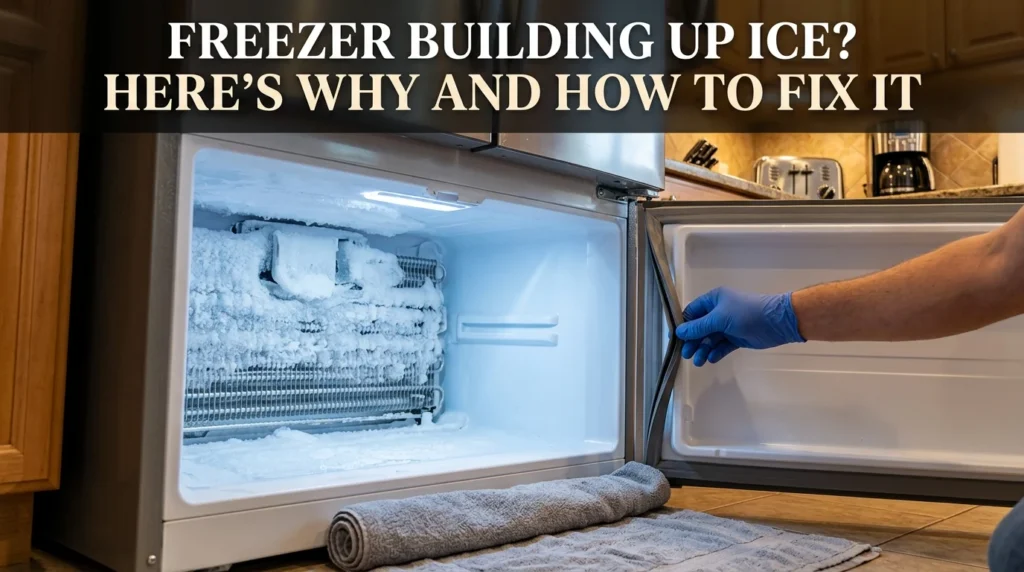
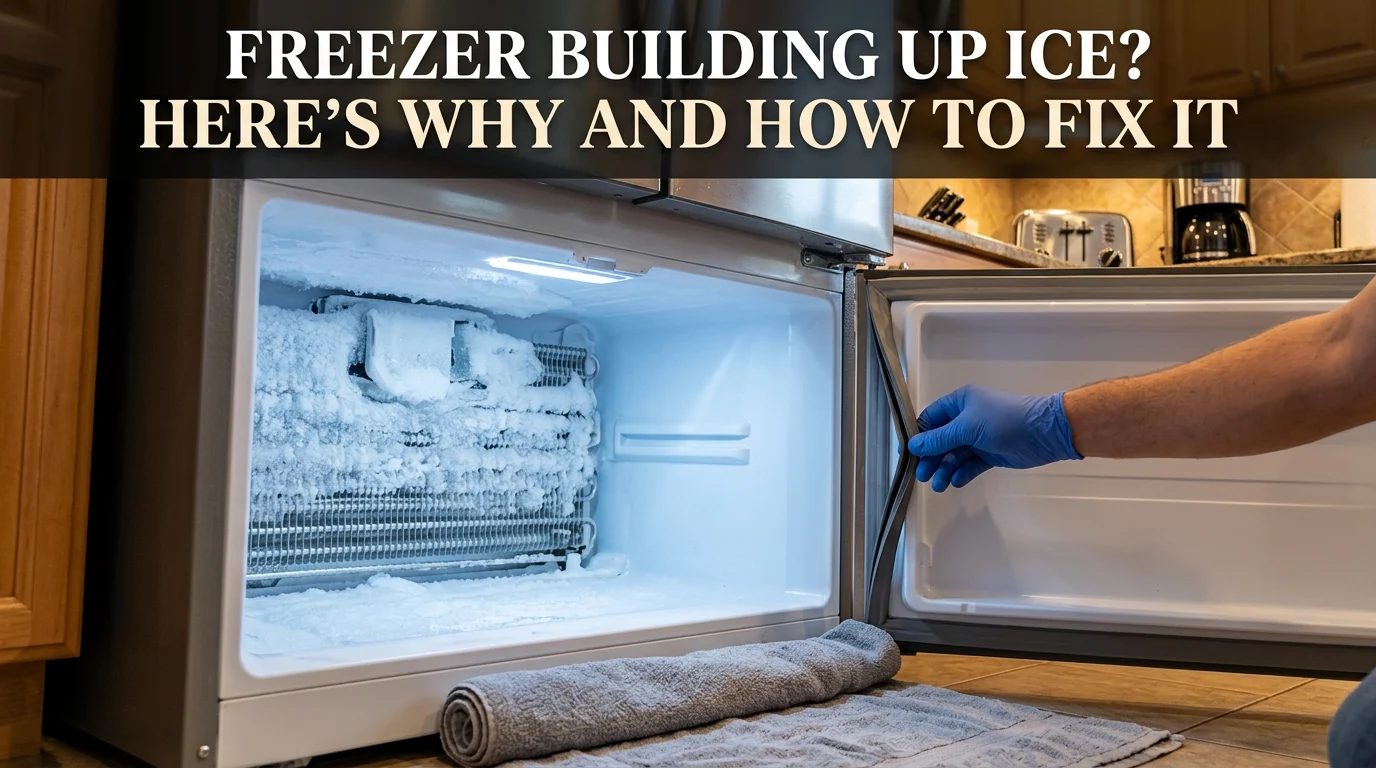
A freezer building up ice usually means warm, moist air is getting inside the unit, or a defrost part has stopped working. Both problems are common, and both are fixable at home in most cases.
If your freezer is building up ice again and again, it is not just annoying to look at. It can raise your energy bill, shrink your storage space, and even spoil food with freezer burn. The good news is that a freezer building up ice almost always points to one of a few clear causes. Once you know where to look, most fixes take less than an hour.
Ice builds up in a freezer when warm air meets cold surfaces inside it. This happens when the door seal is worn, the door stays open too long, hot food goes in before it cools, or a defrost part like the thermostat, timer, or heater fails. Fixing the cause stops the ice from coming back.
What Causes a Freezer Building Up Ice
Every case of freezer ice comes down to one thing: moisture meeting cold air. Here are the most common reasons it happens.
A worn or damaged door gasket. The rubber seal around your freezer door keeps warm air out. Once it cracks, stretches, or loses its grip, room air leaks in every second the freezer runs. That moisture lands on the cold evaporator coils and turns straight into frost.
Leaving the door open too long. Every time you search for something with the door open, humid kitchen air rushes in. Over time, that habit adds up to a thick layer of frost near the door and shelves.
Placing hot or wet food inside. Warm containers release steam the moment they hit the cold air. That steam freezes fast, usually on the nearest surface or shelf.
A failed defrost thermostat, timer, or heater. Most modern freezers use a small heater to melt frost off the evaporator coils on a set schedule. If the defrost thermostat, defrost timer, or defrost heater stops working, that melting cycle never happens, and ice keeps piling up on the coils and the back wall.
A clogged defrost drain. Melted frost is supposed to run out through a small drain tube. When that tube gets blocked, the water refreezes inside the unit instead of draining away.
Blocked vents or an overpacked freezer. Packed shelves can block the vents that move cold air around. This makes some spots too cold and others too warm, which encourages frost to form unevenly.
A problem near the ice maker. If your unit has a built-in ice maker, a stuck piece of ice can prop the chute door open. Warm air then leaks straight into the freezer through that gap.
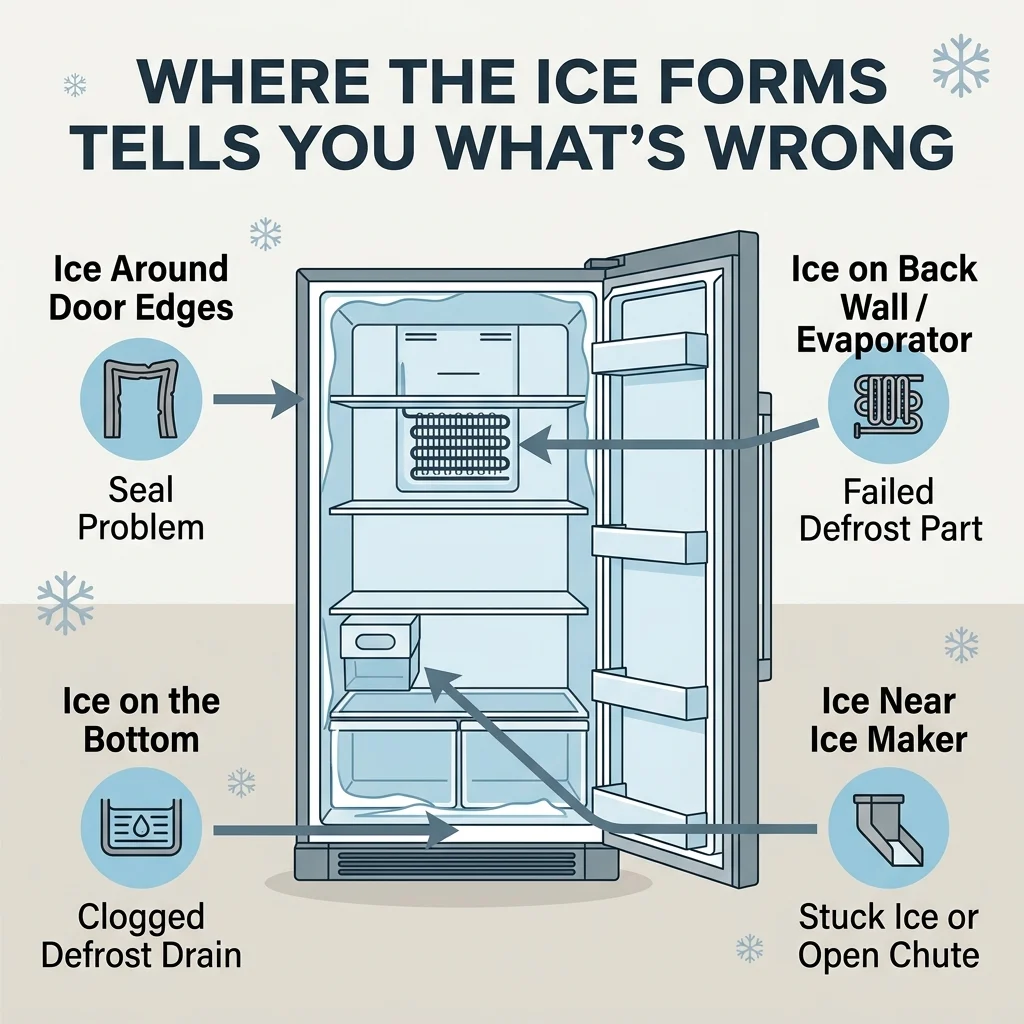
Where the Ice Forms Tells You What Is Wrong
You do not need to guess. The location of the ice is often a clear clue.
Ice around the door edges or on the door itself almost always points to a gasket or seal problem. Warm air is leaking in right where the door meets the frame.
Ice on the back wall or around the evaporator usually means a defrost part has failed. The thermostat, timer, or heater is not clearing frost the way it should.
Ice only on the bottom of the freezer often means the defrost drain is clogged. Melted frost is pooling and refreezing instead of draining out.
A thin, powdery layer of frost all over is usually normal. It comes from everyday door opening and does not always signal a fault.
Ice near the ice maker or dispenser chute points to a stuck ice cube or a chute door that will not close all the way.
Freezer Type Matters
Not every freezer forms ice the same way, so it helps to know which type you own.
Chest freezers rely on manual defrosting since most do not have an automatic cycle. Frost buildup here is expected over time and is simply cleared by hand every few months.
Upright freezers without frost free technology work the same way. Ice forms gradually and needs a manual defrost every three to six months.
Frost free upright freezers use a heater and timer to melt frost automatically, usually once a day. Ice buildup in these models almost always means one of those parts has failed, since the freezer is not supposed to frost over at all.
Freezers with a bottom mounted drawer or built-in ice maker add extra parts, like the chute door, that can let air in if they are not sealing properly.
How to Fix a Freezer That Keeps Icing Up
Most ice problems can be cleared with a manual defrost, followed by a check of the likely cause.
- Move your food to a cooler. This keeps items safe while the freezer is off.
- Unplug the freezer. This stops the compressor and lets the ice begin to melt on its own.
- Lay towels inside and around the unit. They will catch the water as the ice melts.
- Let the ice melt fully. Do not chip at it with a knife or any sharp tool, since this can damage the interior lining.
- Wipe the inside clean with warm water and a little dish soap or baking soda.
- Dry the interior completely before plugging the unit back in.
- Restock your food once the freezer has reached a safe temperature again.
Defrost time depends on the size of the unit.
| Freezer Size | Typical Defrost Time |
| Small or mini freezer | 2 to 4 hours |
| Standard upright freezer | 6 to 12 hours |
| Large chest freezer | 12 to 24 hours |
Once the freezer is clean and dry, check the door gasket for gaps, confirm the drain hole is clear, and set the temperature to 0 degrees Fahrenheit, which the FDA lists as the safe target for frozen food storage. If ice returns within a few days, a defrost part is likely the real cause.
How to Stop Ice From Coming Back
A few small habits go a long way toward keeping a freezer clear.
- Close the door fully every time, and check that nothing is blocking it from sealing.
- Let hot food cool to room temperature before storing it.
- Wrap and seal food tightly so it does not release moisture into the air.
- Clean the door gasket regularly and replace it if it feels stiff or torn.
- Avoid overpacking shelves so cold air can move freely.
- Keep the freezer a few inches away from the wall so heat from the compressor can escape.
- Set the temperature correctly and check it with a thermometer once a month.
When to Call a Professional
Some fixes are simple enough to handle yourself, but a few situations call for a trained technician. If the compressor runs constantly, if ice returns within days of a full defrost, or if you suspect a failed defrost thermostat, timer, or heater, it is worth getting a professional opinion. These parts involve wiring and require testing tools most homeowners do not have on hand. Calling a technician early can also save you from a bigger repair bill later. If you are in Brooklyn, a certified refrigerator repair technician can test these parts and confirm the real cause during one visit.
Frequently Asked Questions
Why is my freezer suddenly full of frost?
A sudden buildup usually means the door was left open by accident or the door seal has failed. It can also point to a defrost part that has just stopped working.
How do you prevent ice buildup in a freezer?
Keep the door closed as much as possible, cool food before storing it, check the door gasket often, and set the temperature correctly. These steps handle most cases.
How do I defrost my freezer properly?
Unplug the unit, remove the food, lay down towels, and let the ice melt on its own. Clean and dry the inside before turning it back on.
What causes ice to form only on the bottom of a freezer?
This usually means the defrost drain is blocked. Melted frost cannot flow out, so it pools and refreezes at the bottom.
Why is my freezer icing up even though the door seals fine and I have not changed the temperature?
This points to an internal part rather than the door. A defrost thermostat, timer, or heater may have failed, or the drain tube could be clogged.
Is powdery frost from frequent door opening actually a problem?
Usually not. A light, powdery layer from regular use is normal and does not always signal a fault. Thick, solid ice is the sign to look for instead.
Why is there ice build up in my freezer?
Ice buildup happens when warm, humid air reaches the freezer and condenses, then freezes. You will see ice forming in the freezer around a worn door gasket, after the door is left ajar, or when the defrost system fails. Steady ice form in freezer walls that returns quickly usually points to a failed defrost heater or thermostat rather than normal frost.
Final Thoughts:
If your freezer keeps building up ice and the steps above have not solved it, a certified technician can take it from here. GS Appliance Repair offers same day refrigerator and freezer repair across Brooklyn, with a written quote before any work begins. Every repair includes a 90 day parts warranty and a 30 day labor warranty in writing. Call (844) 788-0204 to book a visit.